Overcome doorsteps with LEGO ramps
Stairs, high kerbs and small elevations such as door thresholds are often insurmountable obstacles in the lives of people with physical limitations or disabilities. Compared to ramps, however, stairs and steps are perceived by many people as more aesthetically pleasing. However, statistics show that barrier-free access is particularly relevant: Almost one in ten people in Germany has a severe disability (source). In the interests of an equal society, it is important to permanently remove barriers and prevent new ones from being created.
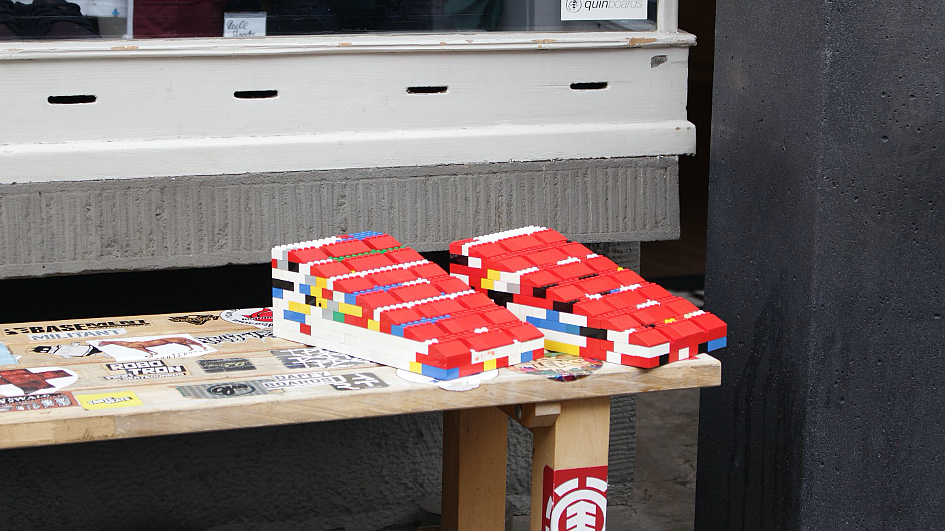
The Young City of Cologne project, founded in 2017, has set itself the goal of enabling wheelchair users to access public places with insurmountable door thresholds. This means that people in wheelchairs can also visit local businesses, cafés and restaurants. The idea behind it is simple but effective: small ramps are built from donated LEGO bricks, which can be placed on the doorstep as required. People who are dependent on a wheelchair can use the ramp to cross the threshold.
In Cologne, 21 Lego ramps are already in use, providing greater accessibility at various thresholds. The aim of the Young City of Cologne is to distribute 100 ramps throughout the city.
Material LEGO donations and building materials such as glue and cutter knives are needed for this project. The project is also always looking for hard-working craftspeople to build the ramps. Herethe Young City of Cologne explains how the ramps are made and shows them in action.
There are now similar projects based on this model all over Germany, including in Hanau.
By the way: Our GARANT trainees also know their way around LEGO: They made wooden tables for a LEGO championship this year. You can find out more about this project here.
There are now similar projects based on this model all over Germany, including in Hanau.




This also makes it barrier-free
Barrier-free doors also offer many opportunities to design passageways without thresholds so that they can be used by all people without any problems. In addition to installation in new buildings, conversions of existing interior doors are also possible with the landlord's permission. Barrier-free access should even be standard in public facilities. In nursing homes, hospitals and care facilities, such as nurseries and residential homes, they provide free access for all people.

What needs to be considered during planning? Our quick tips for barrier-free access
- Doors and door elements should stand out visually from their surroundings (e.g. by the colour of the door handle in relation to the door leaf)
- Clear opening widths of doors in care homes, residential homes, day centres and flats of at least 90 cm and heights of at least 205 cm
- Reveal depth of up to 26 cm for swing, sliding and space-saving doors for easy operation
- Easy opening and closing of functional doors via automatic opening systems
- Push-buttons for automatic door systems at a height of 85 cm above the top edge of the finished floor
- Avoid door thresholds or maximum height of 2 cm
- Appropriate door operating height depending on use, for example for wheelchair users or tall people with back restrictions
- Door viewers at seat height (approx. 120 cm above the floor)
Important: When planning, the opening and opening direction of barrier-free doors should be taken into account depending on the location. Doors to wheelchair-accessible sanitary facilities should always open outwards. For escape routes, the door should open in the direction of escape. All barrier-free doors should also be able to be unlocked from the outside so that access is possible in an emergency.
Access to a barrier-free home starts with the door
The process of creating unrestricted accessibility within a living space begins at the entrance door and continues seamlessly inside the home. GARANT doors can be fitted with intelligent extras that prevent annoying door barriers. For example, technical elements such as electric sliding door fittings from the LIMATIC range or electric swing door drives that can be operated automatically and can also be controlled using a radio remote control are possible. In addition, finger-trap protection or a barrier-free lever handle can be added to the doors. A barrier-free handle makes it easier to open and close doors in terms of accessibility.
Functional doors from GARANT guarantee accessibility and make everyday life easier for everyone thanks to their lack of thresholds and features.